Design goal
Make knowledge change how the player acts, grows, and shapes the world.
Intended audience
Players who enjoy exploration, consequential choices, and character growth through discovery.
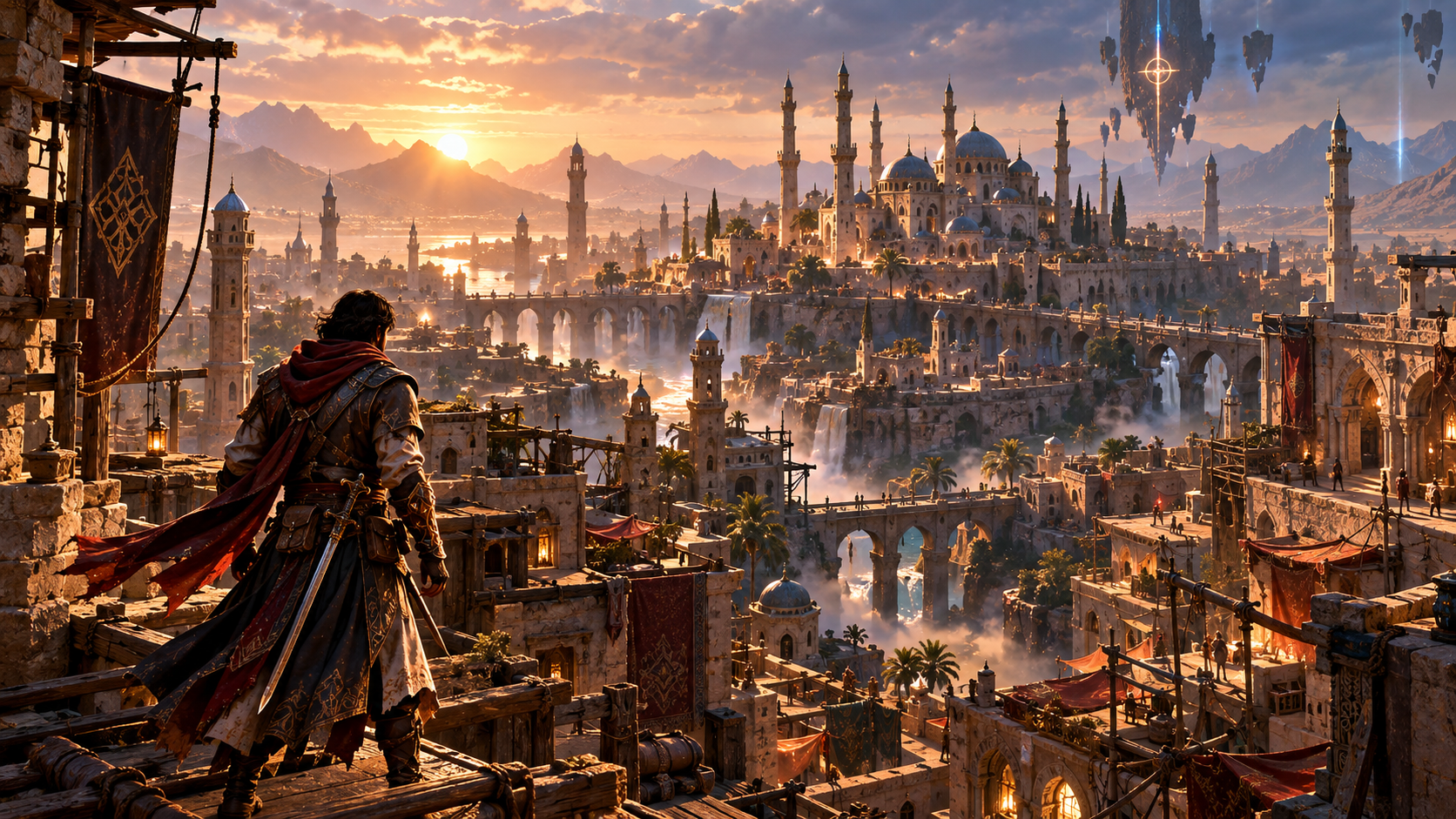
CONCEPT STUDY / Systems, progression & choice
Become capable because you understood the world.
Design goalMake knowledge change how the player acts, grows, and shapes the world.
01 / PROJECT SNAPSHOT
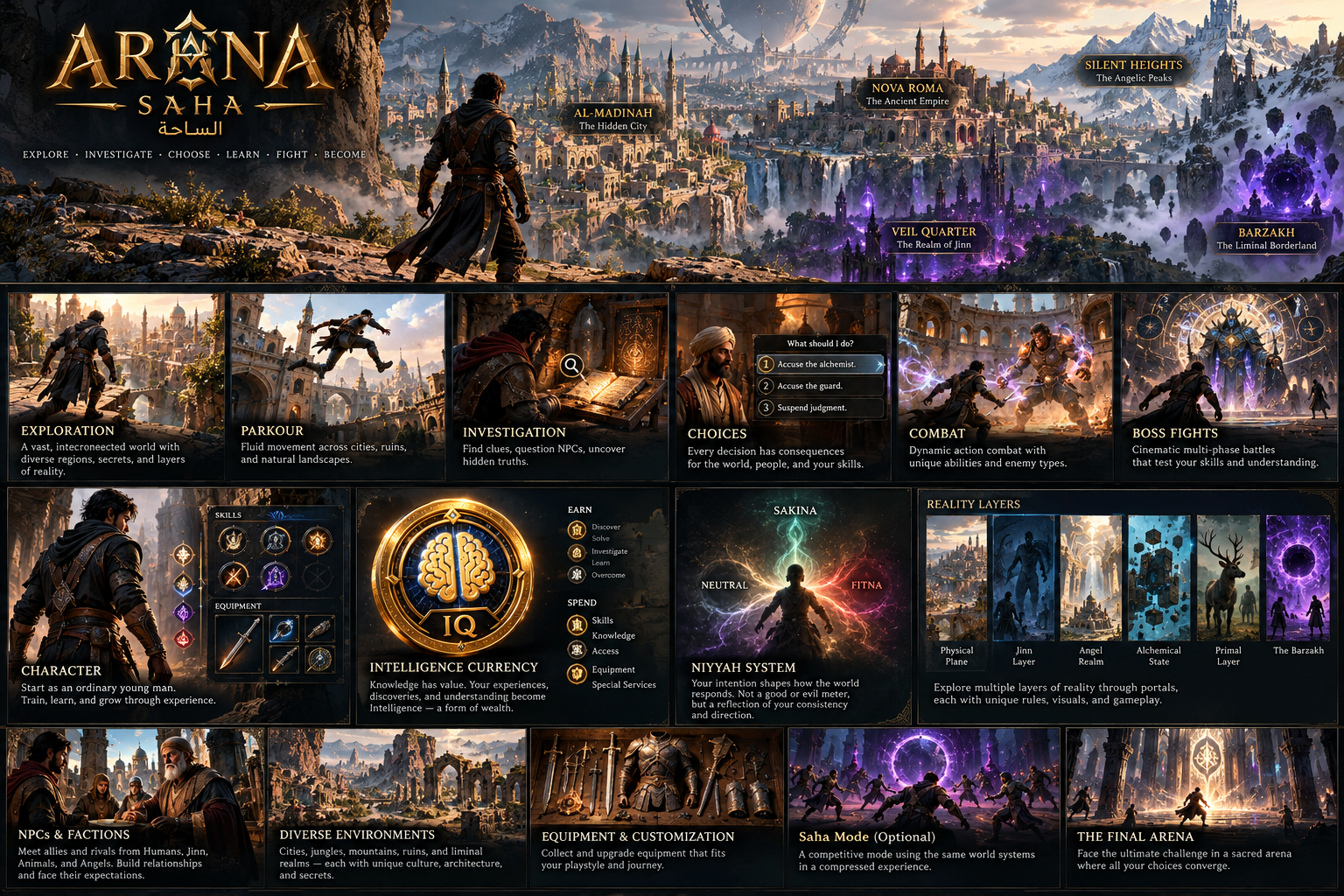
A single-player action-adventure game set in an original world shaped by culture, conflict, and player choice, where Tariq explores, fights, builds relationships, and uses Intelligence to influence his abilities, decisions, and the unfolding story.
Make knowledge change how the player acts, grows, and shapes the world.
Players who enjoy exploration, consequential choices, and character growth through discovery.
How can knowledge unlock meaningful options without becoming a universal solution or a number to farm?
Become capable because you understood the world.
02 / CORE GAMEPLAY LOOP
Concept loop: the next challenge returns the player to observation and a new decision.
03 / SYSTEM DESIGN
Design intent and rules to validate in a prototype.
Discovery, evidence, and learned world rules create opportunities for training, interpretation, and access.
A discovered skill is an opportunity, not instant mastery; training and practice turn it into a useful ability.
Keep persistent knowledge distinct from any spendable resource; that economy remains an open design decision.
Trust and disagreement change what companions share and which routes or opportunities remain available.
Tariq is the playable protagonist. Companions have independent goals and limits rather than simply dispensing skills.
Make the cause of a changed relationship understandable without reducing it to a good/evil score.
A major encounter tests observation, preparation, movement, and learned regional rules.
The Archivist concept combines misleading evidence, material changes, combat, and a final consequential choice.
Knowledge should support a smarter approach without making a single discovery mandatory.
04 / VISUAL DIRECTION
Concept visuals communicate the intended experience; they are not evidence of a finished playable build.
05 / DEVELOPMENT & VALIDATION
One compact Al-Madinah district, one investigation, one relationship conflict, one Intelligence interaction, contextual skill offers, and the Archivist encounter.
Observe whether players use evidence to change a decision and can explain the resulting relationship or ability change.
Build an Intelligence specification, a decision flowchart, and one encounter prototype. Record what players understood before tuning thresholds and consequences.
This case study currently presents concept design and visual material. Playable builds, implementation breakdowns, and measured playtest revisions are not yet included.
06 / DESIGN DOCUMENTATION
Working GDD v0.3. The statement above defines the current concept direction.