Design goal
Make every portal an exciting, readable decision without breaking the flow of the race.
Intended audience
Mobile players who enjoy quick competitive races, readable controls, and unpredictable opportunities.
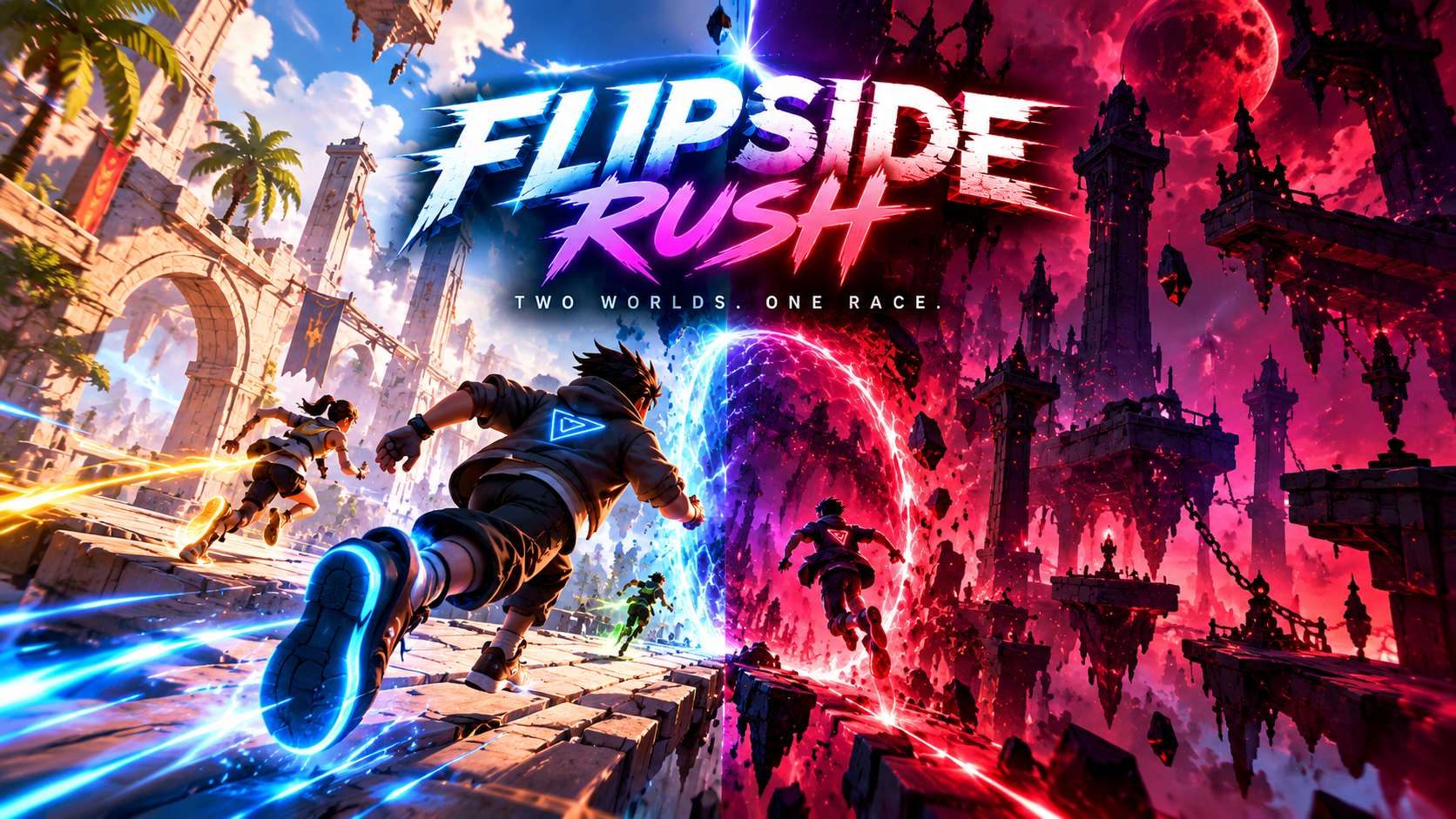
CONCEPT STUDY / Multiplayer clarity & risk/reward
Two worlds. One race. Catch a portal, adapt, and keep chasing the finish.
Design goalMake every portal an exciting, readable decision without breaking the flow of the race.
01 / PROJECT SNAPSHOT
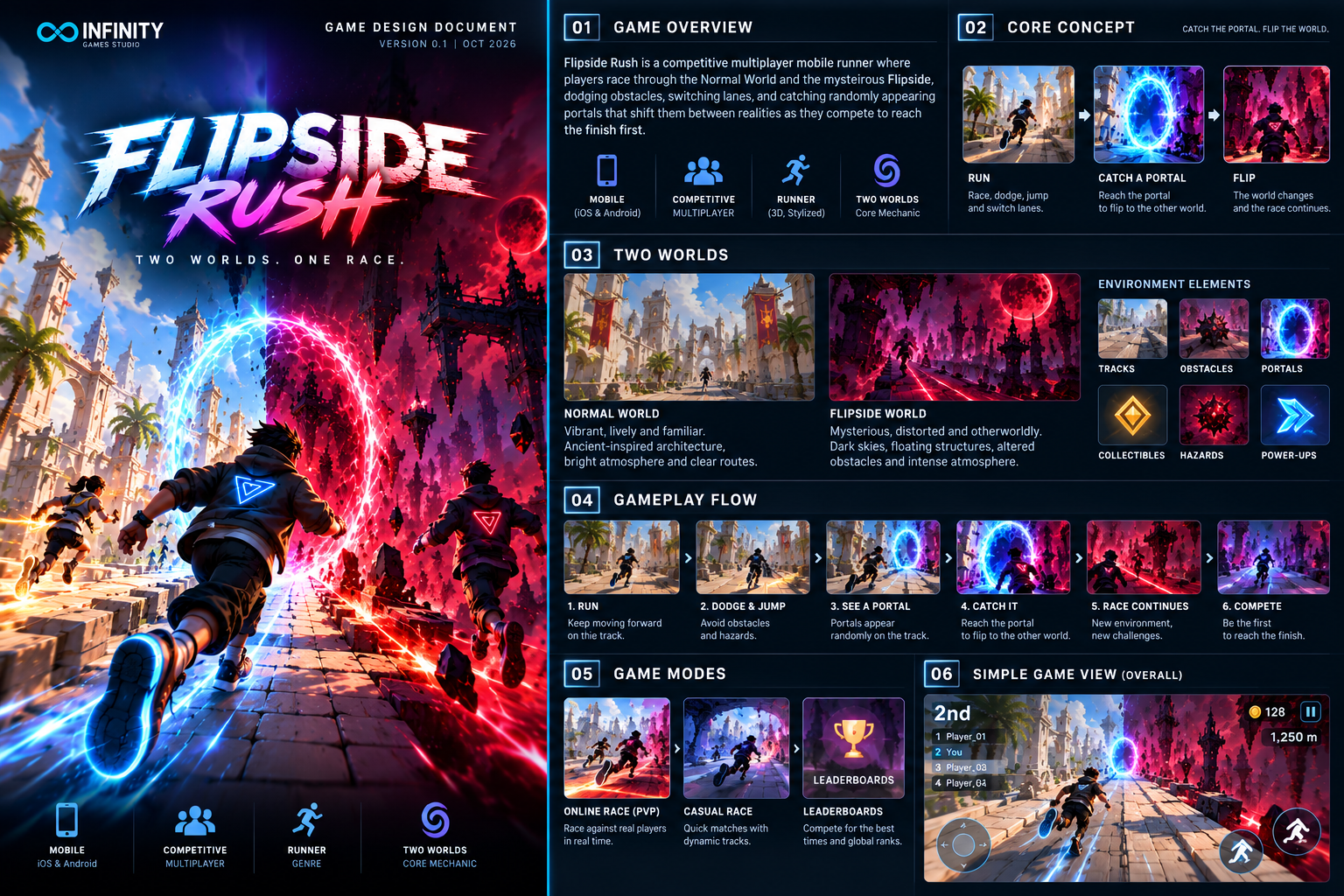
A competitive multiplayer mobile runner where players race through the Normal World and the mysterious Flipside, dodging obstacles, switching lanes, and catching randomly appearing portals that shift them between realities as they compete to reach the finish first.
Make every portal an exciting, readable decision without breaking the flow of the race.
Mobile players who enjoy quick competitive races, readable controls, and unpredictable opportunities.
How can unpredictable portals create anticipation without allowing randomness to decide the race?
Two worlds. One race. Catch a portal, adapt, and keep chasing the finish.
02 / CORE GAMEPLAY LOOP
Concept loop: the next challenge returns the player to observation and a new decision.
03 / SYSTEM DESIGN
Design intent and rules to validate in a prototype.
Catching a portal toggles the runner between Normal and Flipside; missing it preserves the current world.
Racers can occupy different realities at the same time. The next caught portal switches the individual player back.
A missed portal must never trigger an automatic transition or reset the player’s reality.
Keep familiar movement readable while the environment changes around the player.
The initial runner uses three lanes, jumping, sliding, and obstacles. Transitions should preserve momentum.
Portal effects and the darker Flipside presentation must not hide hazards on a mobile screen.
Create anticipation through calculated, player-unpredictable portal appearances.
Spawn spacing, safe placement, world-specific advantages, and catch-up rules are open design questions.
Test why players choose a portal before assigning permanent advantages to either world.
04 / VISUAL DIRECTION
Concept visuals communicate the intended experience; they are not evidence of a finished playable build.
05 / DEVELOPMENT & VALIDATION
One short track, one runner, two environment states, portal catch/miss detection, basic obstacles, and a finish line. A ghost or bot can support early tests before production networking.
Compare portal catches and misses, obstacle collisions after transitions, and players’ explanations of their current world. Later multiplayer tests should examine portal use alongside win rate.
Prototype the portal state machine and annotate a short track. Tune telegraphing and spawn safety before adding networking, economy, or power-ups.
This case study currently presents concept design and visual material. Playable builds, implementation breakdowns, and measured playtest revisions are not yet included.
06 / DESIGN DOCUMENTATION
GDD v0.1 / October 2026. The statement above defines the current concept direction.