Design goal
Make supporters feel involved in the match through meaningful actions and stadium feedback.
Intended audience
Football fans who enjoy rivalry, shared match tension, and expressive competition.
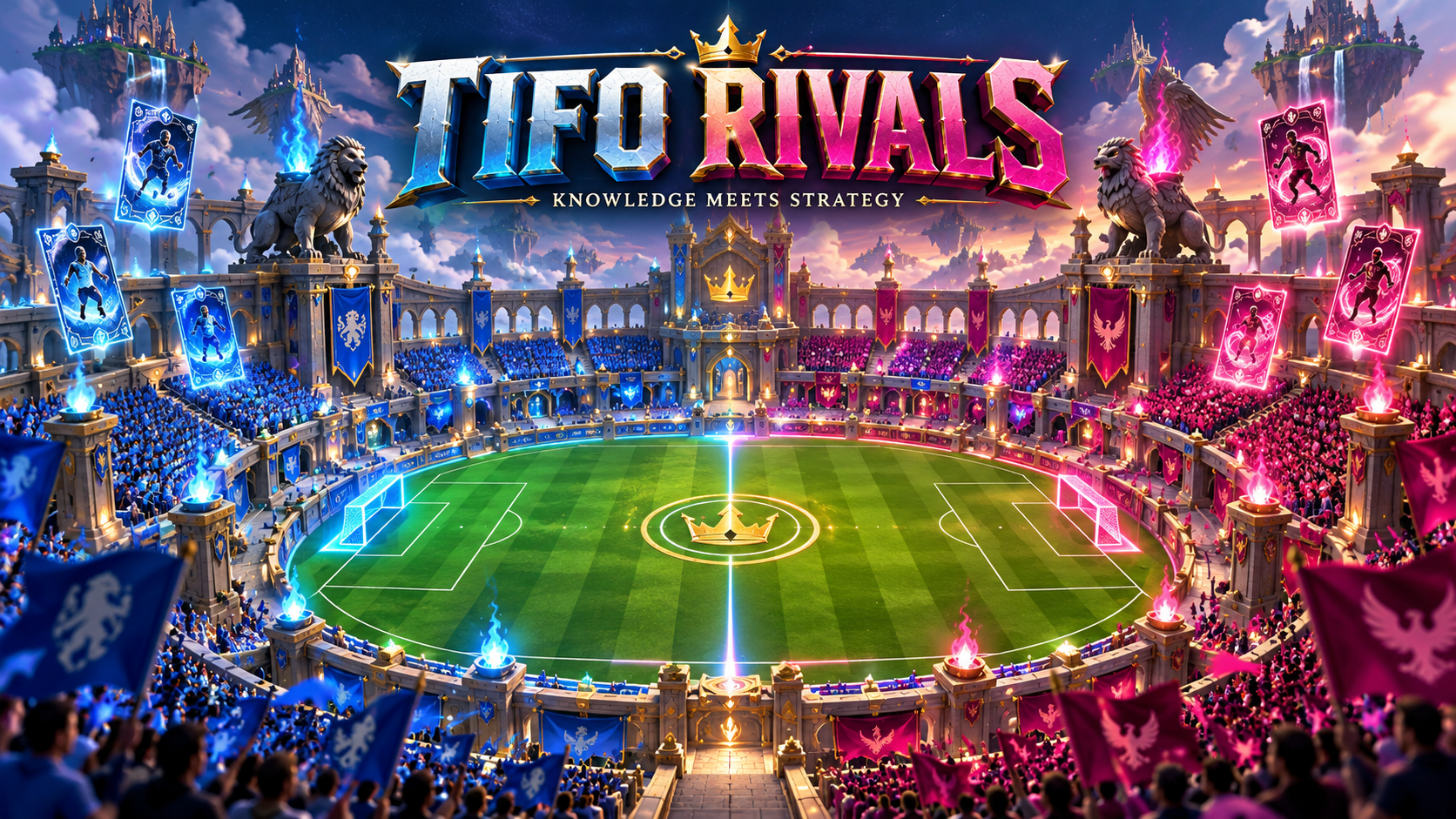
CONCEPT STUDY / Emotion, momentum & player influence
Feel part of the match, with your participation reflected in its atmosphere.
Design goalMake supporters feel involved in the match through meaningful actions and stadium feedback.
01 / PROJECT SNAPSHOT
A competitive football-fan game built around making the player feel part of the match rather than simply watching it, where rival supporters compete through interactive systems connected to the tension, momentum, and atmosphere of football.
Make supporters feel involved in the match through meaningful actions and stadium feedback.
Football fans who enjoy rivalry, shared match tension, and expressive competition.
How can fan actions create a sense of influence while remaining readable, fair, and connected to football?
Feel part of the match, with your participation reflected in its atmosphere.
02 / CORE GAMEPLAY LOOP
Concept loop: the next challenge returns the player to observation and a new decision.
03 / SYSTEM DESIGN
Design intent and rules to validate in a prototype.
Give supporters an active response to the tension of a match.
Candidate interactions from the case-study brief include chant/rhythm play, coordinated tifos, and match-moment reactions. These are design candidates, not implemented features.
Define what each input changes and distinguish atmosphere from control over a real match result.
Make the state of the contest visible and audible through crowd energy and stadium presentation.
The earlier GDD explores escalating Revolt arena states. The current fan-focused direction needs its own event-to-feedback rules.
Maintain clear gameplay signals when audiovisual intensity rises.
Keep participation understandable and rewarding for supporters with different levels of knowledge and reflexes.
Input windows, scoring, accessibility, and competitive format remain to be specified for the new direction.
Test whether players understand why an action succeeded before adding more competitive layers.
04 / VISUAL DIRECTION
Concept visuals communicate the intended experience; they are not evidence of a finished playable build.
05 / DEVELOPMENT & VALIDATION
Proposed first study: one stadium, one match moment, two rival sides, one fan interaction, and one visible momentum response.
Ask players what their action changed and whether the stadium feedback made them feel involved. Check that they can distinguish fan influence from direct match control.
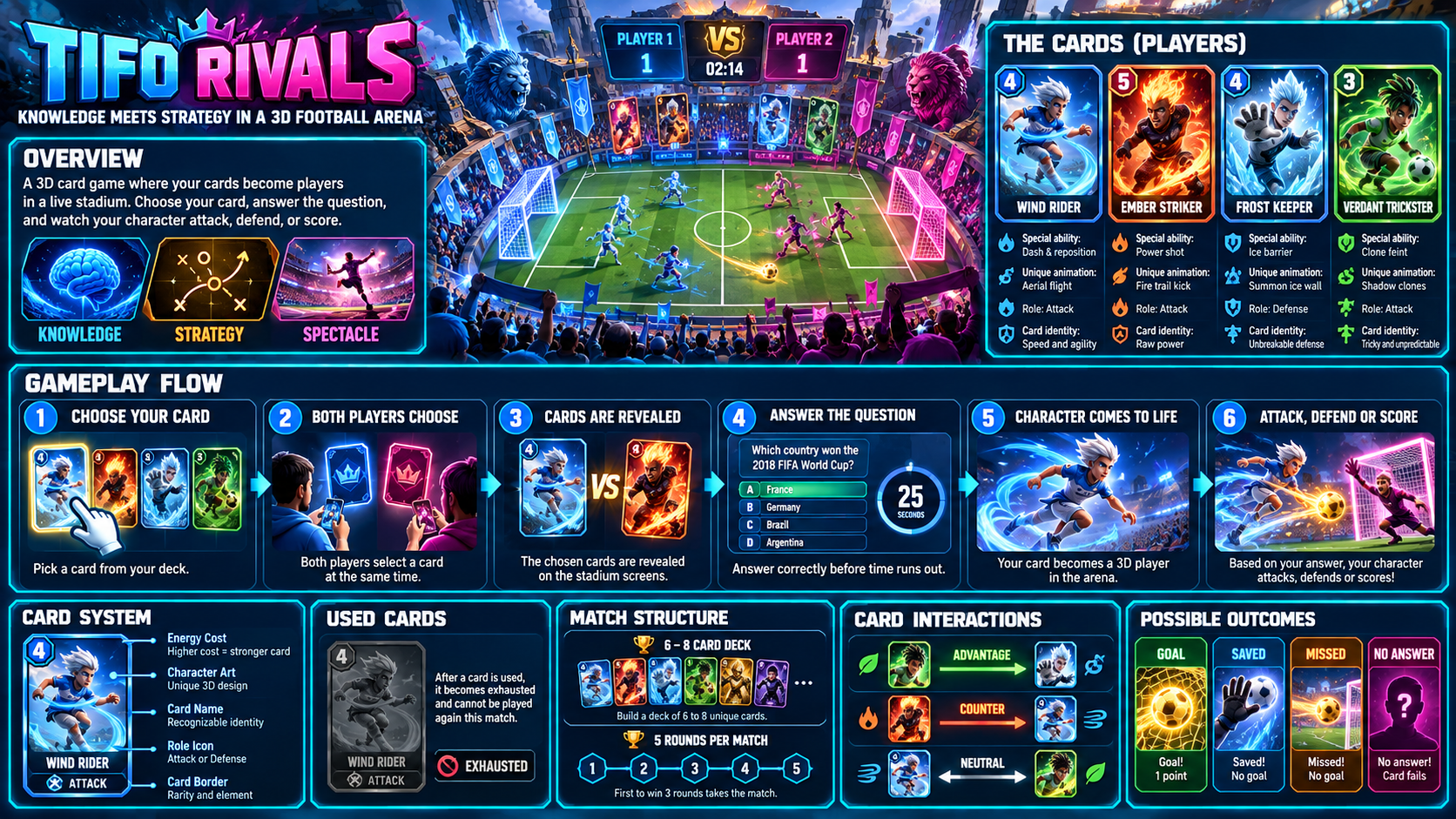
Map match events to fan actions and feedback, then prototype one interaction. The attached v0.2 GDD documents an earlier card-and-knowledge duel; it is retained as design history, not the specification for the new fan-focused concept.
This case study currently presents concept design and visual material. Playable builds, implementation breakdowns, and measured playtest revisions are not yet included.
06 / DESIGN DOCUMENTATION
Earlier concept GDD v0.2. The statement above defines the current concept direction.